Wednesday, April 30, 2014

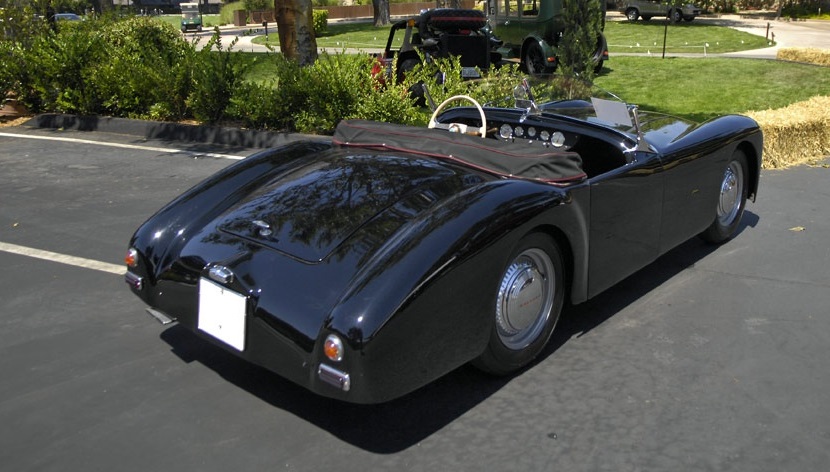
Lagonda Vignale DP2138


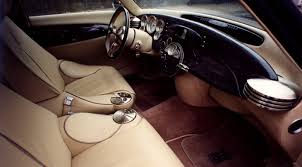
DP2138 was based on a platform from within the Ford empire and powered by a V12. But the coachwork and interior was solely the work of the Newport Pagnell factory – no-one else in the world could have produced such a fine automobile. Apart from the styling, this car in fact has mechanically little in common with the 1993 concept.


Sadly the project didn’t proceed further and the car was sold to a collector in the Far East. What stopped this fabulous project? A focus within AML on the DB7 perhaps or the fact that the Lagonda marque was so little known outside of the UK. Whatever, I still think it’s even better looking than the DB9 based Rapide and represents, at least to me as the right car at the wrong time.


These photographs have been provided with the kind assistance of a friend of mine at AM.


1964 AMC AMX Vignale Prototype

1964 AMC AMX Vignale Prototype

Amazing, beautiful, sexy.  The AMX 3 was a mid-engine wonder designed by AMC that looks years ahead of its time.  Technically a production vehicle, most enthusiasts list it with the prototypes.  


The production versions were built by Bizzarrini of Ferrari fame, but unfortunately the project was cancelled after only six were finished. 


Source: Internet
1963 AC MA-200 V8 Prototype

1963 AC MA-200 V8 Prototype - Amelia Island Concours 2010

Code named MA-200 by the AC Company, this car was designed and built at the Thames Ditton factory in 1962 - and was destined to replace the aging AC Ace line. This prototype is one of one. The AC factory never produced another. Interestingly, the MA-200 was envisioned at the same time as the Carroll Shelby Cobra - which fueled a swirl of controversy: was this to be the 'Cobra?' Cobra or not, this 'idea' did become a car, built with one of the earliest HO 289 Ford V8 power plants. Thus, the MA-200 is an important 'missing link' in the lineage of the AC Ace/Cobra.


http://files.conceptcarz.com/img/AC/63-AC_MA-200-V8-DV-10-AI_e01.jpg
Designed by a former MIG aircraft engineer, the MA-200 was way ahead of its time, with a space frame chassis, inboard F1 style front suspension and inboard rear discs. Of particular note: This car was designed and coachbuilt at the AC factory, years before the 'AC/Frua 428' and the Frua Maserati Mistral, both of which share striking similarities to the MA-200. It is impossible to not draw a connection between these entities.

The forensic restoration of this vehicle is based off of original factory workshop photographs, and signed and dated engineering drawings obtained, as a result of thorough research by the current owner, from the car's original mechanic some 4 decades later.


Source: conceptcarz.com 

1956 Claveau Prototype

1956 Claveau Prototype - Tampa Bay Automobile Museum

This car was designed by Emile Claveau and presented at the Paris auto show in 1955. The engine is a 2-stroke, 3-cylinder from DKW with a 4-speed gearbox. It is a unibody with four wheel independent suspension. Rubber rings nested in each other provide the suspension; they were called "anneaux Neiman" and were installed with success on bikes and scooters.

The car was exhibited but never tested. In fact, the gas tank was never installed. A French collector, Doctor Jeanson, rescued the Claveau from a salvage yard and it was later bought by the Tampa Bay Automobile Museum. After restoration and the addition of a gas tank, the Claveau has now been driven, 50 years after being introduced at the Paris auto show.

It is the last design from Emile Claveau and the only one known to survive. Mr. Claveau was a prolific designer, always well in advance of his time. In 1925 hia first automobile was a mid-engine with an aerodynamic body. In 1930, he decided that front-wheel drive had a big advantage due to the position of the engine, giving more luggage storage.
  • Location: Tampa Bay Automobile Museum - Pinellas Park, FL
Source: remarkablecars.com

1954 Edwards America Prototype

1954 Edwards America Prototype
The 1954 Edwards America convertible coupe had a massive hood housing a huge V-8 engine. 

The 1954 Edwards America convertible coupe actually debuted in the autumn of 1953 as Sterling Edwards's European-style grand touring car with American components and abundant power.

Heir to a steel cable business, Edwards was a successful race-car driver on the West Coast in the early- and mid-1950s. He constructed his own race cars.

The first was a sports racer with four-wheel independent suspension and Ford V-8 engine. The second used a Chrysler "hemi" stuffed into a Henry J chassis.

Competition from Jaguars and Ferraris ultimately convinced Edwards to buy ready-made race cars. Instead, he started constructing road cars in South San Francisco.

Though financed by Edwards, actual work was carried out by Phil
Remington -- who later did fabrication and engineering on the Ford GT-40.

The America sported European styling with American components.
©2007 Publications International, Ltd.

Styling was influenced by an Italian Cistitalia Edwards saw at the 1948 Winter Olympics in Switzerland. The Edwards America had clean, delicate lines, but with a massive hood housing a huge American V-8.

The prototype seen here used a strengthened 100-inch Henry J chassis powered by an Oldsmobile Rocket V-8 with Hydra-Matic transmission. To keep costs reasonable, the body was fiberglass with trim from the parts bins of various U.S. manufacturers.

Taillights were 1952 Mercury; headlight rings came from the 1953-1954 Studebaker.

The Henry J frame was not quite strong enough, however. Later cars used a 1950-1952 Mercury wagon frame reinforced and cut down to 107 inches. The Olds was replaced by Lincoln or Cadillac V-8s. A hardtop coupe also was offered.
The style of the Edwards America was influenced by an Italian Cistitalia.
©007 Publications International, Ltd.

A well-trimmed leather interior and Kelsey-Hayes wire wheels added to the sporting luxury image Edwards sought to create. Workmanship was first-rate throughout.

In spite of saving money by using mass-produced parts, the America was costly to build. Price initially was $6,769, but rose to about $8,000. Even then, Edwards lost money on each car.

Production ended in late 1954 after only five cars, including the prototype, had been built.

Source: howstuffworks.com

1948 Vauxhall Roadster Prototype

1948 Vauxhall Roadster Prototype
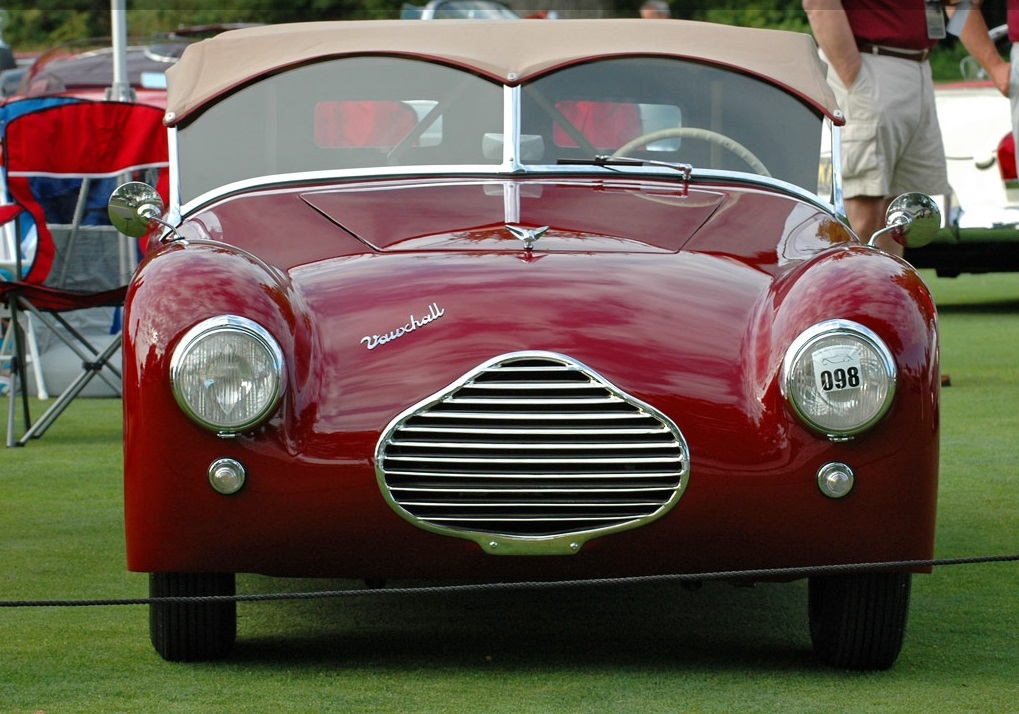
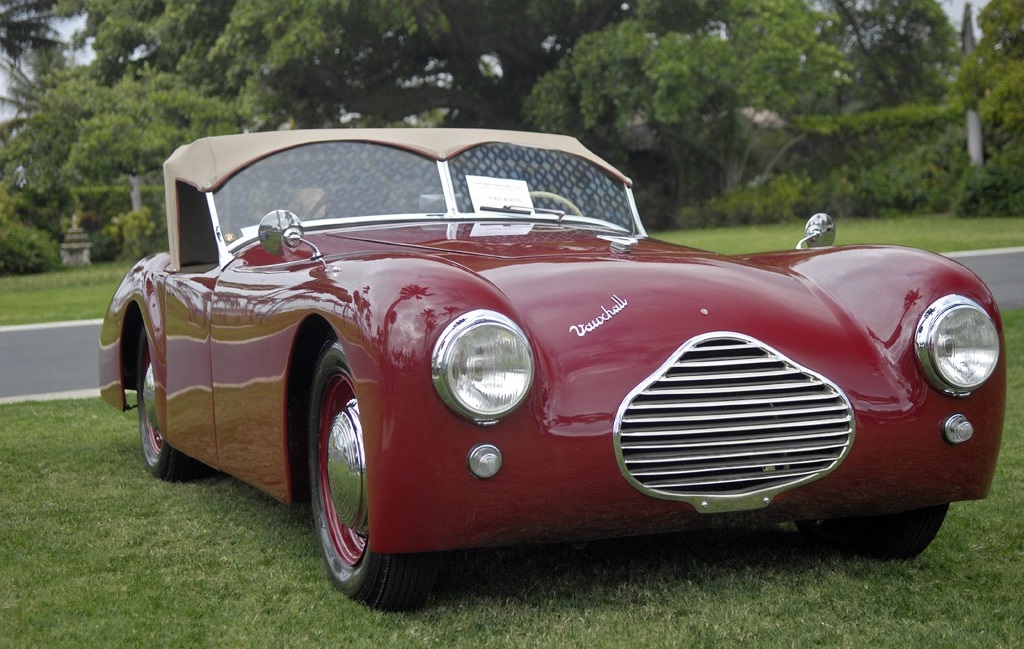
This is a curious and almost forgotten Vauxhall, built as a prototype originally with a view to a limited production model. The car was built in Northern Switzerland at the Gebrider Zimmerli workshop in Reiden. At the end of World War II all types of cars, new or old, were in very short supply as almost all European production plants had either been converted to aid in the war efforts or in most cases the manufacturing plant and machinery had been destroyed during the hostilities. Switzerland had suffered less than most but had very little heavy industry in the first place and almost all cars were imported.
Image description
Prior to the War Werner and Fritz Zimmerli owned a successful Vauxhall & Chevrolet dealership in Reiden In 1948 Vauxhall launched the L Type Wyvern & Velox and so within a small time frame Werner & Fritz had practical experience, ready knowledge and a plentiful supply of Vauxhall parts for the L Type models. Fritz's son, then an apprenticed in the business, convinced his father & uncle that there might be a demand for a two-seat roadster based around the 6 cylinder Velox, with its newly bored out 2275cc engine, and using as many standard Vauxhall parts as possible. Fritz Zimmerli contacted the factory at Luton to suggest the possibility a jointly funded project, however Vauxhall were fully occupied getting as much production from the Luton plant to meet demand for the new L Type and had little interest in what would have been a low volume seller at a time of austerity across Europe. Despite this David Jones, Vauxhalls head of styling, did show interest in the body design and may have made some arm’s length suggestions at the time.
Image description
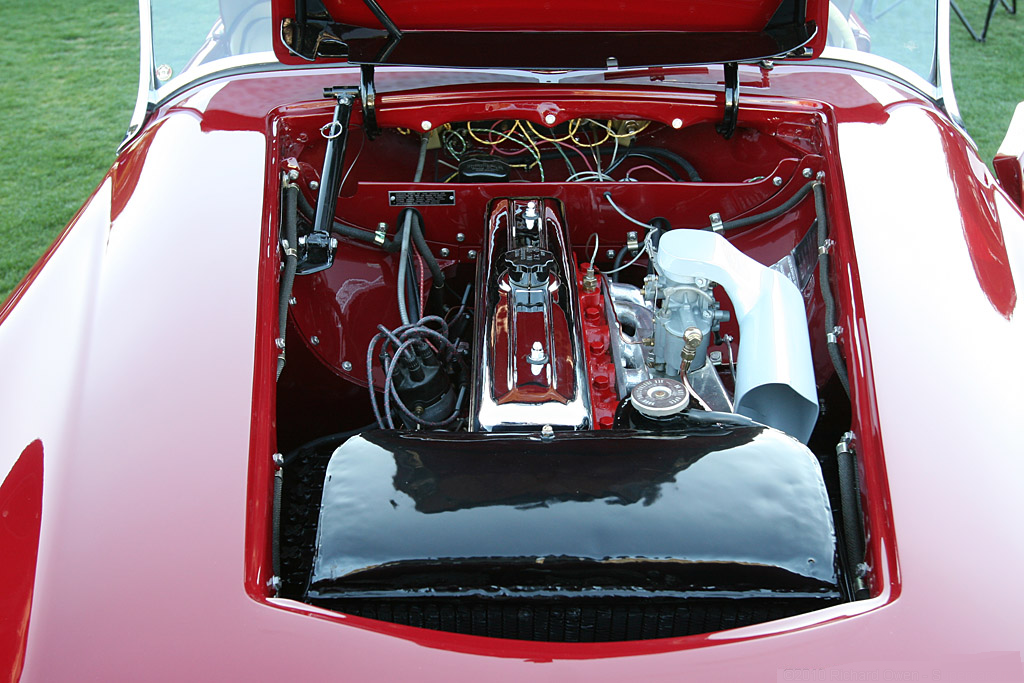
The  2275cc 6 xylinder engine was a tight fit under the bonnet, as it was in the Velox as well. 

Image description
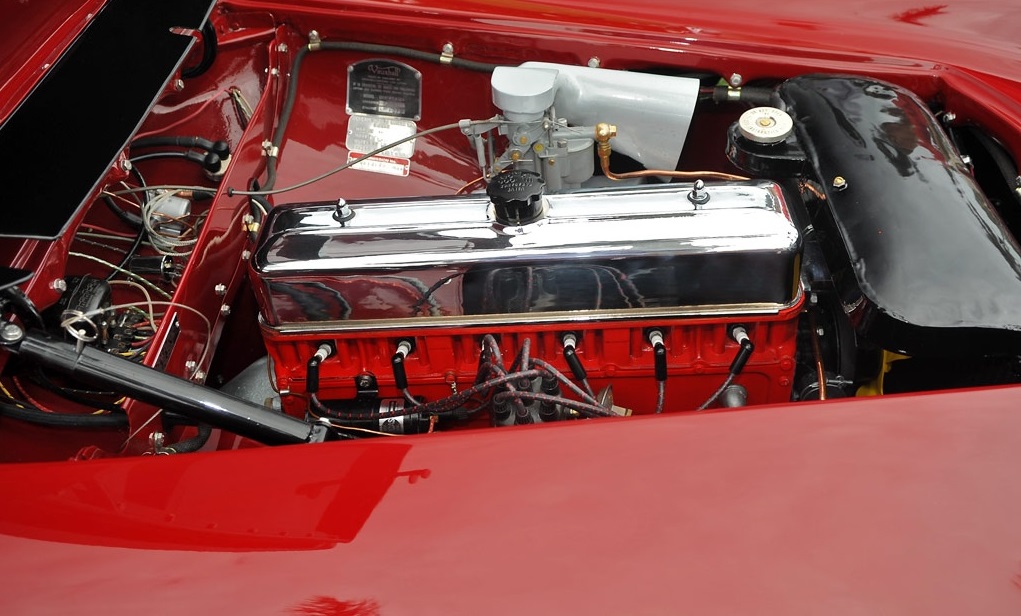
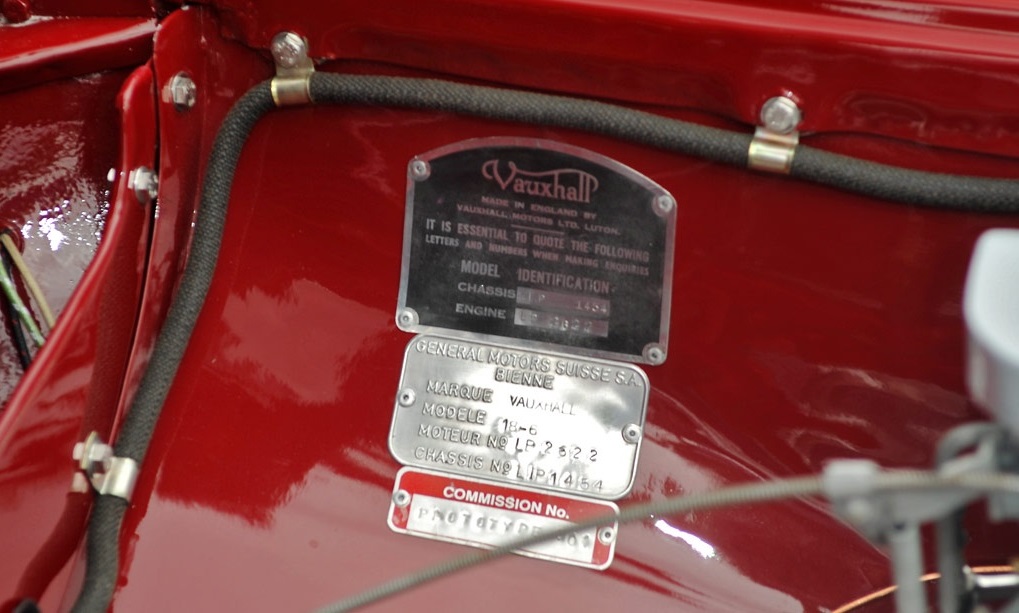
The Zimmerli retained the original Vauxhall Velox Chassis Plate.

Drafting of initial sketches & design work began late in 1948 and actual construction in January 1949. The frame was constructed from a double-tube setup using adapted front suspension from the L Type Velox, featuring a Dubonnet independent setup that used torsion bars in addition to Dubonnet's usual oil-filled spring-shock absorber units.

The body was formed by hand and by one man - Zimmerlis' panel beater Enrico Basetti, an Italian body craftsman who had remained in Switzerland to work after being locally interned during World War II. The body was made entirely from aluminium, except for the doors which were made of steel to increase rigidity. There are steel disk wheels and baby moon-style hubcaps embossed with the word Vauxhall.

Image description
There is no doubt the car looks better with the akward looking roof down.
 
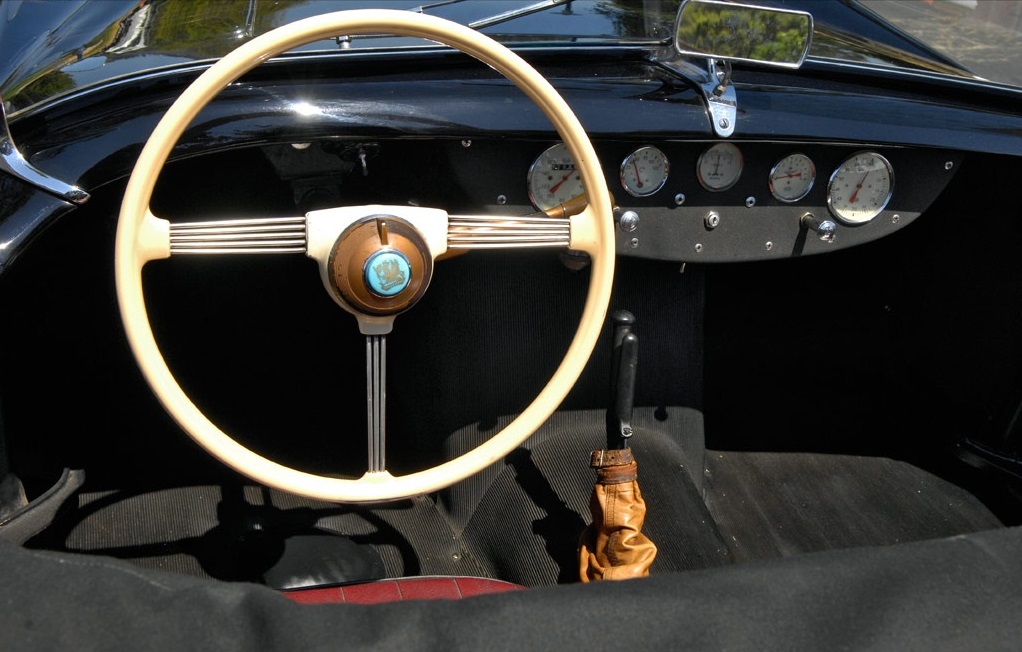
The car was equipped with a standard 2,275cc ohv six-cylinder engine straight from the Vauxhall Velox and gave 54 horsepower, the transmission was the standard Velox 3 speed with column change and a high ratio live back axle. The handbrake was moved to where a floor mounted gearlever would have been placed. 

The result was the Vauxhall Zimmerli-Velox 18-6 Roadster and was first displayed at the October 1949 London Motor Show. This two-seater was their solitary effort to construct a showpiece for their body-work capabilities to Vauxhall. It would be another twelve years before another sporting Vauxhall, the VX Four Ninety, would appear.

Other than a new coat of paint every twenty years or so, the car remains an unrestored original. The Roadster was on display from 1950 until 1968 at the Gebrüder Zimmerli in Reiden. It was acquired by a Swiss collector named Zavier Heller, who retained the car until 1999. It was later brought to the United States. It is completely original except for part of the exhaust system and a repaint. The car has been carefully maintained and sympathetically used. The odometer read just 2,600 kilometres in 2009.
Image description
The snug interior of the Zimmerli, the lever in the middle is the handbrake not the gearlever which is on the steering column. At the time of the picture the care had been resprayed black. 

In 2008, this car was offered for sale at the Quail Lodge, A Sale of Exceptional Motorcars and Automobilia presented by Bonhams Auction. The car was estimated to sell for $100,000 - $140,000 but left the auction unsold.
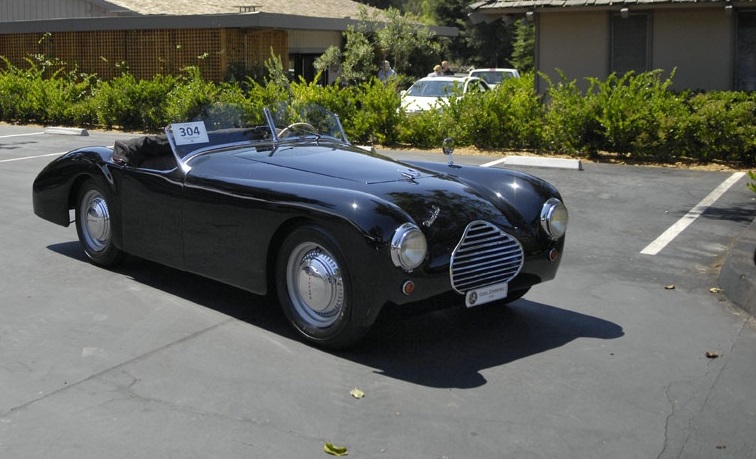
The car recently completed a renovation when it was brought to the 2009 Meadow Brook Concourse d'Elegance which was the first time the Vauxhall had been shown in public since 1968. Fritz Zimmerli, now in his 70s, was the apprentice at the time of construction, and remembers the car well during construction and road testing.
Image description
Image description
More recent pictures of the car with it's new black paintwork taken in 2009  

Engine:                2275cc 54 bhp@3300rpm

Engine No:          LP2622

Chassis No:        LIP1454

Top speed:          80mph

Source:   vauxpedianet.uk2sitebuilder.com

1948 Tasco Prototype

1948 Tasco Prototype - Auburn-Cord-Duesenberg Museum

The 1948 TASCO Prototype is Part Plane, Part Car


 Specifications:

  • Engine: In-Line 8-Cylinder, 289-CID, 115-HP
  • Wheelbase: 131"
  • Weight: 3500 Lbs
  • Cost New: $4,895
1948 Tasco Prototype - Auburn-Cord-Duesenberg Museum
Frontal View
1948 Tasco Prototype - Auburn-Cord-Duesenberg Museum
Passenger Side View
1948 Tasco Prototype - Auburn-Cord-Duesenberg Museum
It’s no coincidence that so many new car designs came within a few years of the end of World War II.  The U.S. had endured a crippling depression, followed by a global struggle, and emerged triumphant. The period from 1945 to the early 1960's was one of unprecedented optimism and unbridled dreams. It seemed that nothing was impossible, given enough willpower and innovation. That shown through in the cars of the day.

1948 Tasco Prototype by Gordon Buehrig

A person who exemplified this attitude was Gordon Buehrig. Born in 1904, he is considered one of the greatest auto designers of the 20th century. Prior to the war he worked with the legendary Harley Earl at GM, before taking on the position of chief designer for Duesenberg in 1929. During his time with them, he designed such immortal classics as the Beverly Sedan, the Torpedo Phaeton, and the Derham Tourster. He lent his skills to the aircraft industry when the war began, working from 1941-45 as a designer of aircraft components.

1948 Tasco Prototype T-roof

After the war, Buehrig, inflicted with a severe case of wanderlust, spent a few years wandering from one project to the next. In 1948, he joined with the American Sports Car company, a short-lived venture which sought to enter the automotive market with innovative new vehicles.  At the time, the nation was obsessed with aviation, and Buehrig was inspired to build a concept car that would draw heavily from design of fighter planes. Thus was born the 1948 TASCO prototype.

The resemblance to an aircraft is obvious upon first inspection. The canopy has a sloped-back windshield and streamlined appearance. The four wheels are sheathed in aluminum, like the ones used as landing gear.  The front grille has marks on it that resemble air intakes for early jets.  The two-person seating  is more akin to that built for a plane than for a land-based conveyance.  Perhaps most significantly, the prototype was the first automobile of any kind with a T-top roof, for which Buehrig earned a patent.
1948 Tasco Prototype Interior

But it’s when one looks at the interior that the similarities to an aircraft become profound.  The controls and gauges are unlike those of any vehicle ever meant to be used on land.  A driver might get the impression that they could sail away into the wild blue yonder, simply by taxiing down a long, straight length of highway.
The prototype was presented to managers at the Beech Aircraft Company in Wichita, Kansas, along with a proposal for them to manufacture it for the general public.  They passed on the opportunity however, and the vehicle was eventually donated to the Auburn Cord Duesenberg Museum in Auburn, Indiana, where it sits on display to this day.
1948 Tasco Prototype by Gordon Buehrig
1948 Tasco Prototype by Gordon Buehrig off road

Buehrig was offered a position with Ford’s design department in 1949, a job he kept until 1965.  In his later years, he taught at the Art Center College of Design in California and worked on several freelance projects.
In 1968, he initiated a lawsuit against Chevrolet, which added a T-top to that year’s Corvette without giving him recognition or compensation.  He was successful in the effort, and was awarded a judgment that allowed him to live the rest of his life in comfort. The great designer passed away in 1990, leaving behind a legacy that few could ever hope to match.

Source: Internet